
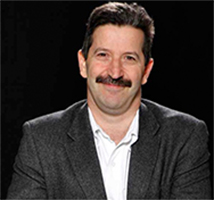
He is Director of the Bloomsbury Institute of Intensive Care Medicine and runs a research group totaling 15 people performing bench-to-bedside research. Specific interests include sepsis and multi-organ failure, tissue oxygenation, infection, novel diagnostics and monitoring. Funding comes from the Wellcome Trust, UK Medical Research Council, European Union, and UK National Institute of Health Research (NIHR) among others. He has published widely, with multiple papers in the New England Journal of Medicine, Lancet and JAMA. Apart from the above-mentioned esophageal Doppler monitor, he has developed a novel tissue PO2 monitor (gauging the adequacy of tissue perfusion) entering clinical trials in 2016, and a novel drug inducing a 'suspended animation' state intended for ischaemia-reperfusion injury that is scheduled to go into man also in 2016. He is also the clinical lead investigator of studies on novel diagnostics for sepsis and infection, and the first intensivist to be appointed a Senior Investigator by the NIHR.
He lectures widely and has delivered four plenary lectures at the annual Congresses of the European Society of Intensive Care Medicine and the US Society of Critical Care Medicine. He has authored/edited several textbooks including the Oxford Textbook of Critical Care and the Oxford Handbook of Critical Care. He is currently Editor-in-Chief of Intensive Care Medicine Experimental (ICMx), co-chair of the new Sepsis Redefinitions Task Force, Council Member of the International Sepsis Forum, Critical Care Theme Lead of the NIHR Health Informatics Collaborative, and does 13 clinical on-call weeks per annum in the ICU.
800.422.0711
1.727.526.1571

OUR OFFICE HOURS
Mon-Fri 8:30am-6:00pm EST
Sat 10:00am-2:00pm EST
Continuing Education, Inc.
University at Sea™
5700 4th St. N.
St Petersburg, Florida 33703
University at Sea™
5700 4th St. N.
St Petersburg, Florida 33703
Charitable Giving
Thanks to you, we are able to provide material to support these and other charities doing on-the-ground, humanitarian work.